Is Your Business Communication Strategy Future-Ready? Why It’s Time to Switch to Intermedia Unite
May 30, 2025
Is Your Business Communication Strategy Future-Ready? Why It’s Time to Switch to Intermedia Unite
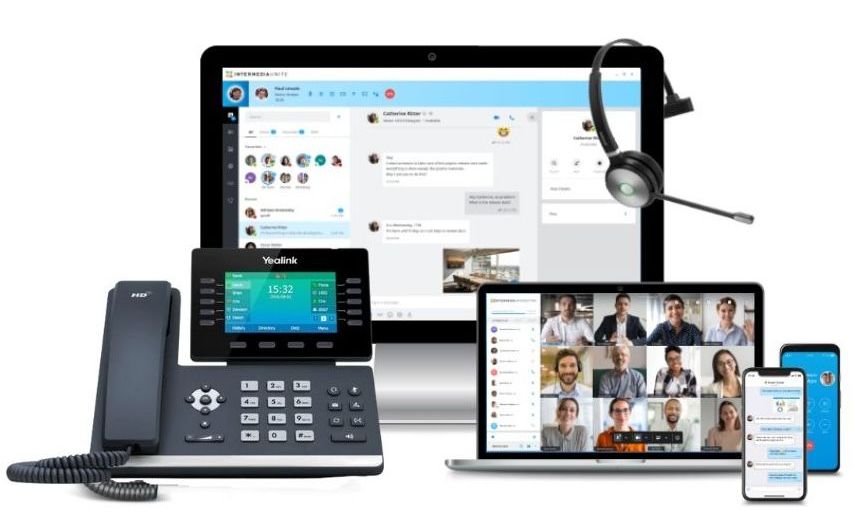
In today’s fast-paced business environment, outdated phone systems don’t just slow you down—they hold your business back. If you’re still tied to desk phones, missing important calls, or struggling with fragmented communication tools, it’s time to explore a smarter, more flexible solution.
Intermedia Unite is designed to modernize the way your business communicates, making it easier for your team to stay connected, productive, and professional—no matter where work takes them.
Transform the Way You Communicate with Intermedia Unite
With Intermedia Unite, you can:
✔ Make and Receive Calls Using Your Business Caller ID
– Keep a professional image by ensuring clients always see your business number, even when calling from a mobile device.
✔ Answer, Transfer, and Manage Calls from Any Device
– Whether you’re at your desk or on the move, never miss a critical call again.
✔ Instant Message Your Team in Real Time
– Cut through email clutter and get quick responses from coworkers with built-in instant messaging.
✔ Host Video Meetings and Conference Calls Anywhere
– Stay connected with high-quality video and audio conferencing tools built directly into the platform.
✔ Text Customers Using Your Office Number
– Keep business communications organized and professional with dedicated texting capabilities through your business line.
✔ Check Voicemail on the Go
– Listen to and manage voicemail from any device, so you’re always in the loop.
✔ Share Files Instantly
– Send and receive important documents securely, keeping collaboration fast and efficient.
Why Businesses Are Making the Switch
Stay Connected Anywhere: Whether you’re in the office, working remotely, or on the road, Intermedia Unite ensures your team and customers stay connected.
Deliver a Better Customer Experience: Fast, professional responses improve client satisfaction and help build lasting relationships.
Simplify Communication and Reduce Costs: Consolidate multiple tools into one seamless platform and eliminate expensive, outdated phone systems.
Empower Team Collaboration: Bring your team together with tools designed to support real-time collaboration and productivity.
Ready to Future-Proof Your Business Communication?
Intermedia Unite makes it simple to upgrade your communication tools, improve customer service, and empower your team.
📞 Call Atlantic Communications Team at 386-677-4040 or 407-830-5993 to learn how easy it is to make the switch!
Before you spend more on marketing, make sure customers can actually reach you 📞 By May, most businesses have a clear sense of what’s working—and what’s quietly creating friction. One of the most common (and most expensive) issues we see is simple: customers try to call, and the experience breaks down. Missed calls, confusing menus, poor call quality, and outdated routing don’t just frustrate customers—they impact revenue, reviews, and your team’s productivity. A mid-year communications checkup is a fast, practical way to tighten up your phone and communication systems so your business sounds professional, responds faster, and stays secure. Below are six high-impact fixes Atlantic Communication Team recommends reviewing right now. 1) Fix the #1 problem: calls going to the wrong place Most phone systems are set up once and left alone. But businesses change—new employees, new departments, new services, new hours. If your call flow doesn’t match your current operations, customers get bounced around or sent to voicemail unnecessarily. What to review: Auto-attendant menu options (Are they still accurate and simple?) Ring groups (Do the right phones ring at the right time?) After-hours routing (Does it go to the right voicemail or on-call person?) Holiday/closure messaging (Is it ready before you need it?) Quick win: Keep your main menu short. If callers have to “guess” which option to press, they’ll hang up. 2) Make sure your outbound caller ID builds trust (and gets answered) If your outbound calls show up as Unknown, the wrong number, or a generic line, you’re less likely to get answers—especially with spam calls at an all-time high. What to review: Does your business name display properly on outbound calls? Are different departments showing the right main number (or location number)? Are sales calls coming from a recognizable number customers can call back? Quick win: Standardize outbound caller ID so customers see a consistent, trustworthy identity—especially for billing, scheduling, and service calls. 3) Turn on voicemail-to-email + transcription to speed up response times Customers don’t leave voicemails because they want to—they do it because they couldn’t reach someone. The faster you respond, the more likely you are to win the job, keep the customer, or prevent an issue from escalating. What to review: Is voicemail-to-email enabled for key mailboxes? Are voicemails going to the right people (not a shared inbox no one checks)? Do you have transcription enabled so messages can be triaged quickly? Quick win: Set up shared departmental voicemail boxes (Sales, Service, Scheduling) that route to multiple recipients—so messages don’t get stuck with one person. 4) Use call reporting to spot missed opportunities (and staffing gaps) You don’t need complicated analytics to learn a lot. Even basic call reporting can reveal: Peak call times Abandoned calls (hang-ups) Missed calls Average hold time Which departments get the most volume What to review: When are calls spiking—and do you have coverage? Are you missing calls during lunch, mornings, or late afternoons? Are customers waiting too long before reaching a person? Quick win: If you consistently see missed calls at predictable times, adjust routing or add a call queue so customers aren’t forced into voicemail. 5) Clean up users, extensions, and admin access (security + simplicity) Over time, phone systems collect clutter: old extensions, former employees, vendor logins, and admin permissions that were never removed. That’s not just messy—it’s a security risk. What to review: Remove old users and unused extensions Reset voicemail PINs (especially shared mailboxes) Confirm who has admin access—and limit it Ensure passwords meet current security standards Quick win: Create a simple “who owns what” list: system admin, billing contact, support contact, and where credentials are stored. 6) Confirm your system can scale with your business (without a rebuild) If you’re planning growth in the second half of the year—new hires, new locations, expanded services—your communication system should support that without duct tape. What to review: Can you add users quickly without new hardware? Can remote/hybrid staff answer calls professionally? Can you support multiple locations under one system? Do you have call continuity options if the office loses internet/power? Quick win: A scalable system isn’t just “nice to have.” It prevents expensive emergency fixes later. The Bottom Line If your phones are creating friction, you’ll feel it everywhere—lost leads, slower service, frustrated staff, and customers who don’t call back. A mid-year communications checkup helps you: Capture more calls Respond faster Improve customer experience Reduce security risk Prepare for growth Atlantic Communication Team has helped businesses stay connected for over 40 years. If you’d like a complimentary mid-year communications assessment, we’ll review your current setup and recommend the highest-impact improvements. 📍 Daytona: 386-677-4040 📍 Orlando: 407-830-5993

Spring Clean Your Business Communications: 7 Quick Fixes That Improve Security, Call Quality, and Customer Experience